🔹 Meta Description
🔹 Focus Keyword
Kashmir Markhor trophy hunting in Chitral
🔹 Secondary Keywords
- US national hunts Kashmir Markhor
- Markhor trophy hunting Pakistan
- Chitral wildlife conservation
- Pakistan national animal Markhor
- Regulated trophy hunting programme
- Community-based conservation in Chitral
US National Hunts Kashmir Markhor in Chitral Under Regulated Trophy Programme
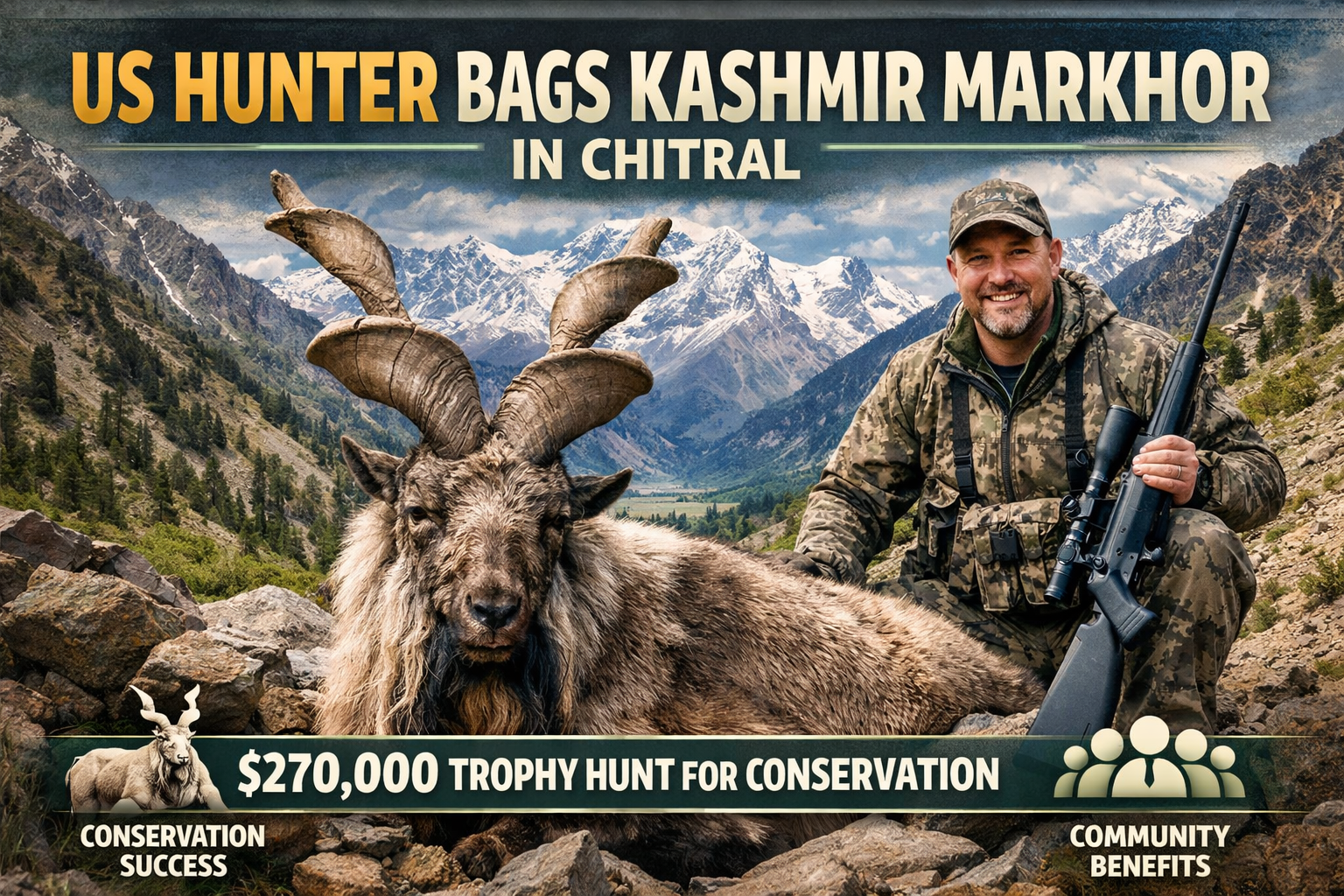
The hunt took place in the Shasha-Thoshi Community Managed Game Reserve, a globally recognised conservation area in Chitral, under the direct supervision of the Khyber Pakhtunkhwa Wildlife Department.
Trophy Hunting Conducted Under Strict Regulations
According to an official press release, Divisional Forest Officer (Wildlife) Chitral Farooq Nabi confirmed that the hunting activity was carried out strictly in accordance with approved trophy hunting regulations. The hunt was conducted in the Thoshi Shasha Conservancy, a protected area known for its successful community-led wildlife conservation model.
The American hunter obtained the hunting permit through an international bidding process, which is part of Pakistan’s regulated trophy hunting framework. This transparent process ensures that only a limited number of older, non-breeding animals are selected, preventing any negative impact on the overall Markhor population.
$270,000 Bid Highlights Global Value of Kashmir Markhor
Farooq Nabi stated that the hunter secured the permit by offering $270,000, reflecting the global significance and high conservation value of the Kashmir Markhor. He explained that Pakistan’s trophy hunting programme has transformed wildlife conservation into a sustainable livelihood source for local communities.
“The Kashmir Markhor is not merely a trophy; it is a symbol of conservation success,” Nabi said.
The substantial bid demonstrates how regulated trophy hunting can serve as an effective conservation tool when managed responsibly and transparently.
Ethical Hunting Standards Strictly Followed
The American hunter, who chose to remain anonymous, hunted a Kashmir Markhor with 52-inch horns from an approximate distance of 510 metres. Officials confirmed that the hunt complied with internationally accepted ethical hunting standards, ensuring minimal suffering and full respect for conservation protocols.
Throughout the process, Wildlife Department officials remained present to ensure:
- Full compliance with the approved permit
- Transparency at every stage
- Strict adherence to conservation rules
This oversight is a cornerstone of Pakistan’s trophy hunting programme and plays a vital role in maintaining international credibility.
Community Welfare Receives 80% of Hunting Revenue
One of the most significant aspects of Pakistan’s trophy hunting programme is its revenue-sharing model. According to Farooq Nabi, 80% of the trophy hunting revenue will be allocated directly to local community development projects.
Community Benefits Include:
- 📚 Education initiatives
- 🏥 Healthcare facilities
- 🛣 Infrastructure development
- 🌱 Conservation-based livelihoods
This approach has strengthened community ownership of conservation efforts and significantly reduced illegal hunting and poaching in the region.
Community-Based Conservation: A Proven Success Model
Chitral’s conservation model has become an international example of how local communities can play a leading role in protecting endangered species. By directly benefiting from conservation revenues, residents have a strong incentive to safeguard wildlife rather than exploit it illegally.
Officials noted that this model has:
- Curbed illegal hunting
- Increased wildlife populations
- Improved socio-economic conditions
The success of the Shasha-Thoshi Conservancy highlights the importance of community-managed conservation initiatives in fragile mountain ecosystems.
Kashmir Markhor: Pakistan’s National Animal
The Kashmir Markhor, Pakistan’s national animal, holds immense ecological and cultural significance. Known for its majestic spiral horns and ability to survive in rugged mountainous terrain, the species has long been threatened by habitat loss and illegal hunting.
Globally, the Kashmir Markhor is listed as a near-threatened species, making its protection a top priority for conservation authorities.
Population Recovery Through Regulated Trophy Hunting
Contrary to misconceptions, regulated trophy hunting has contributed to reversing the decline of Markhor populations in northern Pakistan. By limiting hunts to a small number of older males past their breeding prime, the programme ensures:
- Genetic stability
- Population growth
- Long-term sustainability
Community-managed reserves in Chitral have reported a steady increase in Markhor numbers, earning international recognition for their conservation success.
Transparency and International Compliance
Pakistan’s trophy hunting programme operates under strict national and international wildlife laws. Each hunt requires:
- Government-approved permits
- Independent monitoring
- Compliance with CITES and global conservation standards
This transparency has helped Pakistan build trust with international conservation bodies while generating crucial funding for wildlife protection.
Economic Impact Beyond Conservation
Beyond environmental benefits, trophy hunting revenue plays a vital role in uplifting remote mountain communities where economic opportunities are limited. The funds generated support:
- Job creation
- Eco-tourism development
- Sustainable income sources
By linking conservation with economic benefits, Pakistan has created a win-win model for both wildlife and local populations.
Addressing Ethical Concerns Around Trophy Hunting
Trophy hunting remains a controversial topic globally. However, conservation experts argue that regulated and science-based hunting programmes, such as Pakistan’s, differ significantly from unregulated hunting practices.
Key ethical safeguards include:
- Limited permits
- Independent monitoring
- Community involvement
- Revenue reinvestment in conservation
These measures ensure that hunting contributes positively to long-term wildlife survival.
Chitral’s Role in Global Conservation Efforts
Chitral has emerged as a global conservation success story, demonstrating how responsible wildlife management can protect endangered species while improving human livelihoods.
The region’s community-led initiatives have been praised for:
- Reversing population decline
- Strengthening wildlife protection
- Encouraging sustainable development
Conclusion: Conservation Through Responsible Management
The legal hunting of a Kashmir Markhor by a US national in Chitral highlights the effectiveness of Pakistan’s conservation-based trophy hunting programme. With $270,000 generated, the hunt will directly benefit local communities while supporting long-term wildlife conservation.
As Farooq Nabi aptly stated, the Kashmir Markhor is more than a trophy — it is a symbol of conservation success, community empowerment, and sustainable development.
About the Author