Meta Description
Donald Trump claims Ukraine peace talks are closer than ever after Berlin meetings. Here’s what was agreed — and the key sticking points still blocking a deal.
Focus Keyword
Ukraine peace deal talks
Secondary Keywords
Trump Ukraine peace
Berlin peace talks Ukraine
Ukraine security guarantees
Donbas region dispute
Russia Ukraine negotiations
Trump Says Ukraine Peace Deal Is “Closer Than Ever” — But Is It?
After two intense days of high-level talks in Berlin, US President Donald Trump declared that a peace agreement between Ukraine and Russia is “closer than ever.”
European leaders echoed cautious optimism, with Germany suggesting there is now a real but narrow chance of progress. However, beneath the positive rhetoric, deep disagreements remain, particularly over security guarantees and the future of Ukraine’s Donbas region.
So how close is peace — really?
What Happened at the Berlin Talks?
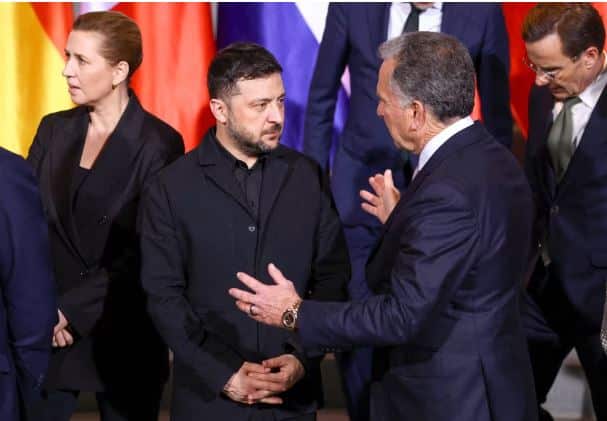
The Berlin meetings brought together senior figures from the United States, Ukraine, and Europe, marking one of the most coordinated diplomatic efforts since the war began.
Key Participants
- Ukrainian President Volodymyr Zelensky
- Ukraine’s chief negotiator Rustem Umerov
- US special envoy Steve Witkoff
- Jared Kushner, Trump’s son-in-law
- German Chancellor Friedrich Merz
The talks focused on the latest version of a US-backed peace plan, aimed at ending the war while preventing future Russian aggression.
“This is not a perfect plan, but it is workable,” Zelensky said.
“The Americans want speed. We want quality. If both align, we are ready.”
Five Key Documents Now on the Table
According to Ukrainian officials, negotiations now involve five separate documents, including:
- Legally binding security guarantees requiring approval by the US Congress
- A framework for post-war reconstruction funding
- Mechanisms to deter future Russian attacks
Zelensky stressed that every detail matters, warning that no aspect of the agreement should reward Russian aggression.
Europe Signals Unified Support
Following the Berlin talks, leaders from across Europe met separately and issued a joint statement pledging closer coordination with Washington.
Countries Involved
EU leaders were joined by representatives from:
- Germany, France, Italy, and the Netherlands
- Denmark, Finland, Sweden, and Norway
- Poland and the United Kingdom
They committed to working with the US to provide robust security guarantees and economic recovery support for Ukraine.
Proposed European Security Measures
European leaders outlined several concrete commitments:
Key Proposals
- A European-led multinational force operating in Ukraine, supported by the US
- Assistance in securing Ukraine’s airspace and maritime routes
- A US-led ceasefire monitoring mechanism with international involvement
- Ongoing military support to maintain Ukraine’s armed forces at around 800,000 troops
- Long-term investment in Ukraine’s reconstruction, supported by immobilized Russian assets in the EU
Russia’s Response: Cautious and Firm
The Kremlin reacted coolly to the developments, saying it has not yet seen the final proposals.
Kremlin spokesman Dmitry Peskov dismissed the idea of a temporary Christmas truce:
“We want peace, not a pause that allows Ukraine to regroup. Our goal is to secure Russia’s interests and long-term peace in Europe.”
Russia has consistently opposed:
- NATO-style security guarantees for Ukraine
- Deployment of Western troops on Ukrainian soil
Moscow has also demanded constitutional guarantees that Ukraine will never join NATO.
The Donbas Problem: The Biggest Sticking Point
While US officials say 90% of issues have been resolved, the question of territorial concessions remains unresolved.
US Proposal
American negotiators floated the idea of:
- A demilitarized free economic zone in parts of Donbas
- Ukrainian withdrawal from the zone
- Russian forces staying out
However, critical details remain unclear:
- Who would govern the zone?
- Who would enforce demilitarization?
Zelensky made Ukraine’s red lines clear:
“A free economic zone does not mean Russian control. Ukraine will not recognize occupied Donbas as Russian — legally or in practice.”
Security Guarantees: “Article 5–Like,” But Not NATO
US officials have described the proposed guarantees as “Article 5–like”, referencing NATO’s collective defense clause.
What That Means
- Strong deterrence against future attacks
- No US troops stationed in Ukraine
- Unclear enforcement mechanisms
Zelensky has warned that Ukraine cannot leave the battlefield without absolute clarity:
“Before we leave, we must be 100% certain about the guarantees.”
What Happens Next?
Zelensky continues diplomatic outreach, including talks in the Netherlands on Russian compensation for war damage.
“This is not just about a ceasefire,” he said.
“It’s about accountability, rule of law, and ensuring the aggressor is punished.”
Trump, who joined European leaders via phone, acknowledged the difficulty ahead:
“We’re closer than we’ve ever been — but it’s a tough one. Both sides want it ended, then suddenly they don’t. We have to get them on the same page.”
Is Peace Really Near?
Despite optimistic headlines, Ukraine peace deal talks remain fragile.
What’s Clear
✔ Diplomatic momentum has increased
✔ Europe and the US are more aligned than before
✔ Ukraine insists on ironclad guarantees
What’s Uncertain
❌ Russia’s willingness to compromise
❌ Enforcement of security guarantees
❌ Final resolution on Donbas
About the Author