Meta Description
Pakistan says a UN Security Council report confirms the presence of terror groups in Afghanistan, supporting Islamabad’s long-held security concerns.
Focus Keyword
UN report supports Pakistan on terrorism
Secondary Keywords
terror groups in Afghanistan
Pakistan Afghanistan security
TTP Afghanistan safe havens
UNSC terrorism report
FO Pakistan statement
UN Report ‘Clearly Supports’ Pakistan’s Position on Terror Groups in Afghanistan: FO
Pakistan’s Foreign Office has said that a recent United Nations Security Council (UNSC) report strongly validates Islamabad’s long-standing concerns about the presence of terrorist groups operating from Afghan territory.
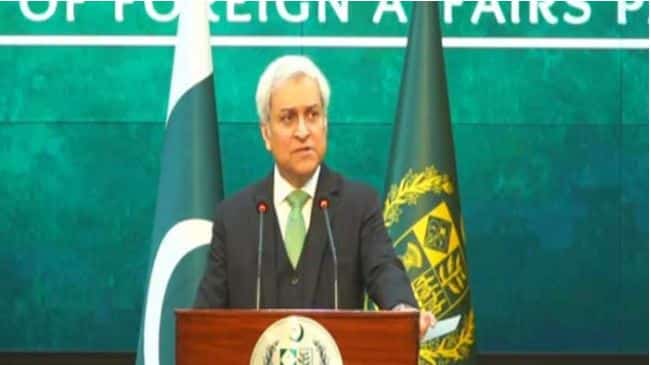
Foreign Office spokesperson Tahir Andrabi said the findings confirm that militant organisations based in Afghanistan remain a serious threat to regional peace and stability.
Terror Groups Undermining Stability in Afghanistan
Speaking at a weekly press briefing on Thursday, Andrabi said militant activity in Afghanistan is not only destabilising the region but also hindering the country’s own development efforts.
“The continued presence of terrorist elements in Afghanistan poses a serious threat to regional peace and security,” he said.
The spokesperson noted that the UNSC report explicitly references the Tehreek-e-Taliban Pakistan (TTP) and other foreign terrorist organisations.
Militant Groups Biggest Obstacle to Pakistan-Afghanistan Ties
According to the Foreign Office, militant organisations remain the single largest barrier to stable and constructive relations between Islamabad and Kabul.
Andrabi said Pakistan remains committed to sustained diplomatic engagement with Afghanistan to address shared security challenges but stressed that peace cannot be achieved without eliminating terrorist sanctuaries.
UNSC Rejects Taliban Claims
The UN report dismissed claims by the Afghan Taliban that their territory is not being used for cross-border attacks, calling such assertions unsubstantiated.
Key Findings of the UN Report
- Multiple terrorist groups are active in Afghanistan
- Regional countries increasingly view Afghanistan as a source of instability
- Terror outfits are involved in planning external attacks
Groups identified include:
- TTP
- Daesh Khorasan (ISIS-K)
- Al-Qaeda
- Other foreign militant organisations
The report described the TTP as the most significant regional threat, operating from safe havens inside Afghanistan.
Taliban Divisions Over TTP Highlighted
The UNSC report also points to internal divisions within the Taliban leadership regarding the TTP.
- Some senior Taliban figures view the TTP as damaging relations with Pakistan
- Others reportedly continue to support the group
The report further highlights:
- Close ties between Al-Qaeda and the Taliban
- Daesh-K as the Taliban’s primary rival
Ceasefire Was Meant to Stop Terror Attacks: FO
Clarifying the nature of the Pakistan-Afghanistan ceasefire, Andrabi said it was not a conventional ceasefire.
“Its purpose was to prevent terrorist attacks inside Pakistan originating from Afghan soil,” he explained.
The spokesperson said Pakistan has credible evidence of cross-border support for attackers and stressed that Islamabad implemented the arrangement in good faith.
However, he added that the agreement was not honoured, and cross-border attacks have continued.
Pakistan Condemns Bondi Beach Attack
During the briefing, Andrabi also condemned the recent Bondi Beach attack in Australia, expressing solidarity with the Australian government and people.
“Pakistan unequivocally condemns terrorism in all its forms,” he said.
Linking Pakistan to Bondi Attack ‘Irresponsible’
The FO spokesperson strongly rejected attempts to link Pakistan to the Bondi Beach attack, calling such claims “regrettable and irresponsible.”
He said:
- An unverified Pakistani name and photograph were circulated
- An innocent individual and their family were put at risk
- Indian media outlets spread false and misleading information
Subsequent investigations confirmed the attacker was of Indian origin and held an Indian passport, he added.
‘Disturbing’ Removal of Muslim Woman’s Hijab in India
Andrabi also condemned a recent incident in India involving the forcible removal of a Muslim woman’s hijab by the chief minister of Bihar.
FO’s Concerns
- Public humiliation of a Muslim woman
- Mocking of the incident by political figures
- Normalisation of discrimination against religious minorities
“Such conduct reflects a troubling pattern of religious intolerance and Islamophobia,” Andrabi said.
He urged the Indian government to uphold minority rights, religious freedom, and human dignity.
Pakistan Calls for Accountability and Regional Stability
The Foreign Office reiterated Pakistan’s call for:
- Strong action against terror groups in Afghanistan
- Responsible journalism
- Protection of religious minorities
- Regional cooperation to ensure peace and security
The UNSC report, Andrabi said, reinforces Pakistan’s long-held position and underscores the urgency of addressing terrorism at its source.
About the Author