Meta Title: Islamabad Paper Mulberry Trees Removed Under PMO Orders | Health & Environment Update
Meta Description: CDA removes allergenic paper mulberry trees in Islamabad following PMO directives. Environment-friendly species are being planted to improve air quality and public health.
Focus Keywords: Islamabad tree cutting, paper mulberry removal, CDA green initiative, pollen allergy Islamabad, environment-friendly trees, Islamabad greenery
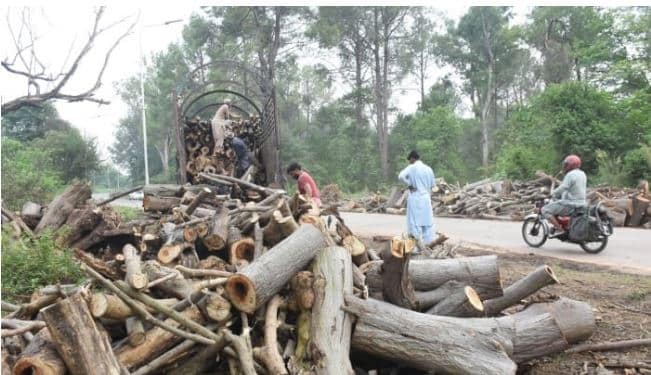
The Capital Development Authority (CDA) has clarified to the Islamabad High Court (IHC) that the recent cutting of paper mulberry trees across the federal capital was carried out on the directives of the Prime Minister’s Office (PMO). This move, part of a broader plan to tackle seasonal pollen allergies, has sparked extensive discussion among citizens, civil society, and political parties.
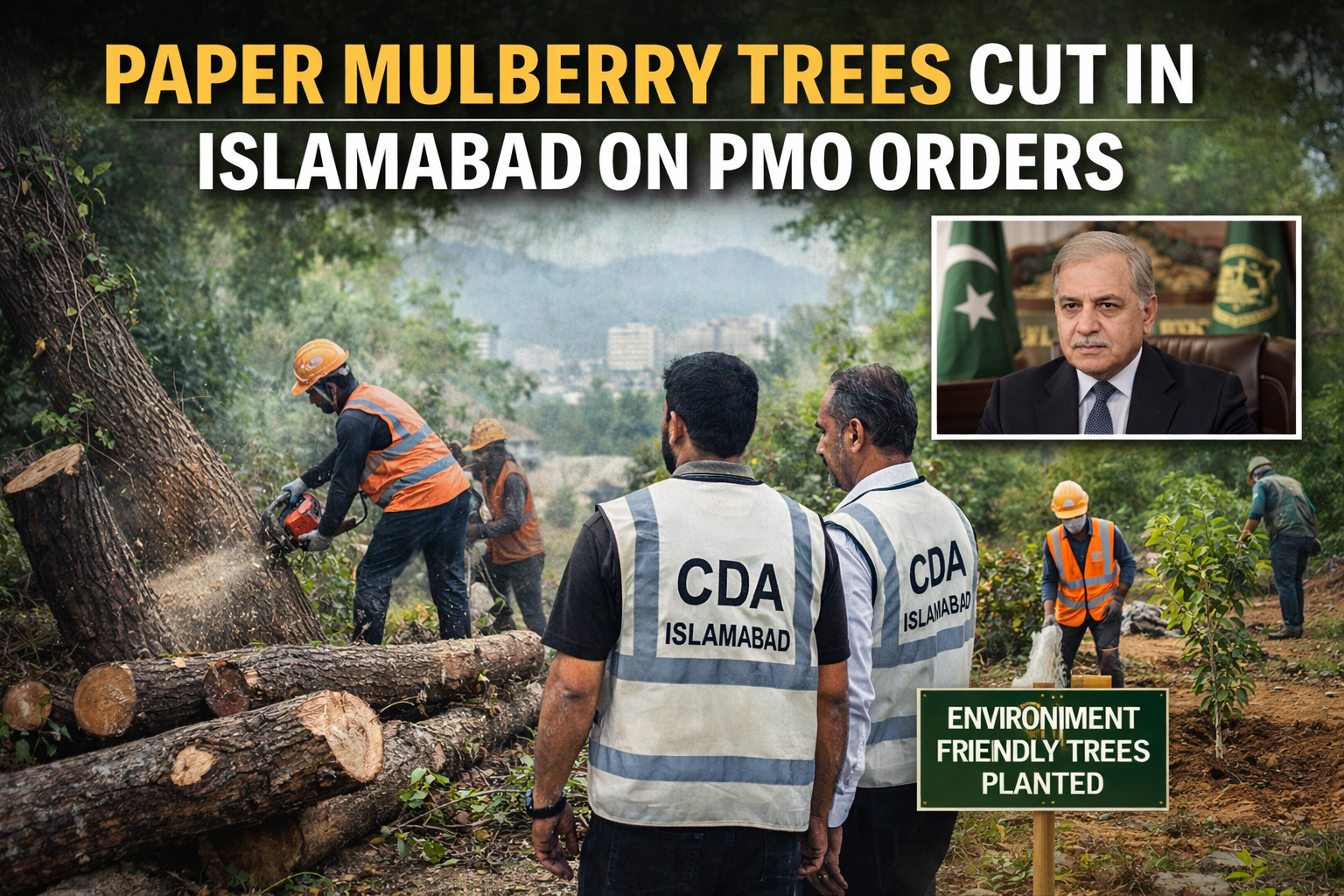
CDA officials explained that modifications to Islamabad’s master plan, including the removal of specific tree species, fall under the federal government’s authority and have been implemented following approved guidelines. The authority emphasized that the city maintains greenery above the mandated 8% minimum green coverage and that all interventions were conducted under Supreme Court-appointed expert recommendations.
The campaign specifically targeted paper mulberry trees, scientifically identified as a major cause of asthma and other allergic reactions. In the past year, nearly 30,000 paper mulberry trees were removed from Islamabad, including 8,700 trees in areas with high pollen intensity such as Shakarparian and F-9 Park. The eradication program followed a rigorous scientific process involving tree cutting, uprooting roots, and soil restoration to prevent regrowth.
The CDA further noted that the PMO took notice of health concerns after a 2024 column by journalist Saleem Safi, directing relevant ministries to address the pollen problem proactively. Large stretches along Islamabad Highway, previously covered with paper mulberry trees, were cleared, and plants were relocated to maintain greenery in other areas. The government also approved the construction of the “Marka-e-Haq” monument in DHA Phase-VIII, with cleared land repurposed for commemorative development.
The campaign has been comprehensive, targeting both recreational areas and urban sectors. Key removals included 12,800 trees from F-9 Park, 8,700 from Shakarparian, and thousands from sectors G-10, G-11, F-10, F-11, D-12, and along Srinagar Highway. Additional removals occurred in G-8, G-9, F-8, H-8, and H-9, ensuring that high-density urban areas and major green spaces were effectively addressed.
Following the removal phase, a sustainable replantation program is underway. CDA officials confirmed that for every allergenic tree removed, three environment-friendly trees are being planted to restore and enhance Islamabad’s green cover. The initiative is expected to conclude by the end of April 2026, with statistical data from the Allergy Centre Islamabad already indicating significant improvements in public health.
This campaign reflects a coordinated approach between the PMO, the Ministry of Health, and the CDA to balance urban planning, public health, and environmental sustainability. By replacing harmful paper mulberry trees with indigenous and ecologically beneficial species, Islamabad is not only addressing pollen allergies but also strengthening its commitment to maintaining and expanding green spaces across the capital.