Meta Description:
Focus Keyword:
Pakistan must create 30 million jobs
Secondary Keywords:
- World Bank Pakistan jobs
- Pakistan employment crisis
- Pakistan youth unemployment
- Pakistan economy jobs growth
- World Bank president Pakistan
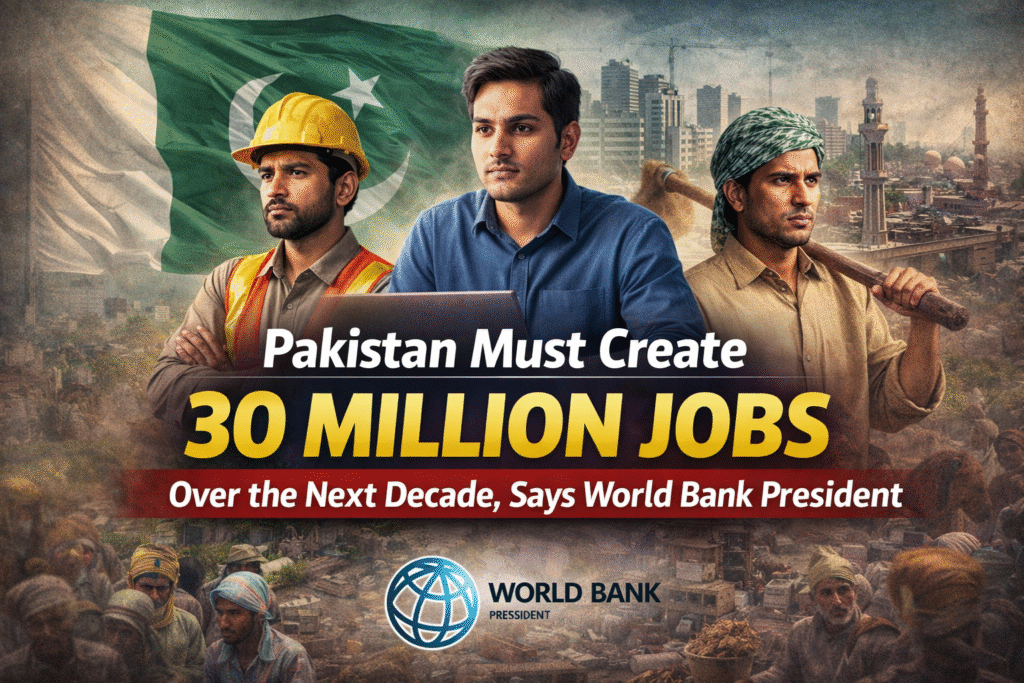
Pakistan Must Create 30 Million Jobs Over the Next Decade, Says World Bank President
Pakistan faces a critical economic and social challenge as it must generate 30 million new jobs over the next ten years, according to the World Bank President. The warning highlights the urgency of addressing rising youth unemployment, population growth, and economic stagnation in one of South Asia’s most populous nations.
With millions of young people entering the labor force every year, Pakistan stands at a crossroads. The country can either turn its demographic growth into an economic advantage or risk deeper poverty, instability, and social pressure if job creation fails to keep pace.
Why Job Creation Is a National Emergency for Pakistan
Pakistan’s population has crossed 240 million, with a large share under the age of 30. This youth bulge presents both an opportunity and a threat.
Youth Population Is Growing Rapidly
Every year, nearly 3 million young Pakistanis enter the job market. Without adequate employment opportunities, this growing workforce faces underemployment or complete exclusion from the economy.
If Pakistan fails to create enough jobs:
- Poverty levels may rise
- Social unrest could increase
- Brain drain may accelerate
- Economic growth will remain weak
The World Bank emphasizes that job creation is no longer optional—it is essential for stability.
Economic Growth Alone Is Not Enough
While GDP growth is important, it does not automatically translate into employment. Pakistan has experienced periods of economic growth in the past, but job creation remained limited due to:
- Capital-intensive industries
- Weak small and medium enterprises (SMEs)
- Poor investment climate
The focus must now shift toward inclusive growth that directly generates employment.
World Bank President’s Warning — What Was Said
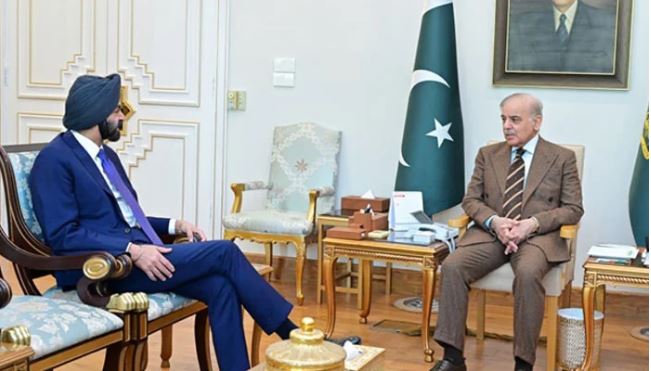
The World Bank President stressed that Pakistan must prepare for the future by investing in people, productivity, and private sector growth. According to him, creating 30 million jobs in a decade will require deep reforms and long-term planning.
Key points highlighted include:
- Strengthening education and skills training
- Encouraging private investment
- Improving governance and ease of doing business
- Expanding export-oriented industries
The message was clear: without reforms, Pakistan risks missing its demographic dividend.
Key Challenges Blocking Job Creation in Pakistan
Skills Gap and Weak Education System
One of Pakistan’s biggest obstacles is the mismatch between education and job market needs. Many graduates lack practical, technical, and digital skills demanded by employers.
Problems include:
- Outdated curricula
- Limited vocational training
- Poor industry-academia linkages
Without addressing skills development, millions of young people remain unemployable despite holding degrees.
Weak Private Sector Growth
The private sector is the largest job creator globally, but in Pakistan it faces multiple barriers:
- High energy costs
- Complex taxation
- Regulatory uncertainty
- Limited access to finance
Small and medium enterprises, which can absorb large numbers of workers, often struggle to survive.
Informal Economy Dominance
A large portion of Pakistan’s workforce is employed in the informal sector, where jobs are low-paid, insecure, and lack social protection. Formalizing the economy is essential for:
- Sustainable employment
- Higher productivity
- Better tax collection
Sectors That Can Create Millions of Jobs
Agriculture and Agri-Processing
Agriculture still employs a major share of Pakistan’s population. However, productivity remains low.
Job potential lies in:
- Value-added agri-processing
- Food exports
- Modern farming techniques
- Cold storage and logistics
By shifting from raw production to processing, millions of rural jobs can be created.
Manufacturing and Industry
Reviving manufacturing is critical for large-scale employment.
High-potential areas include:
- Textiles and garments
- Light engineering
- Construction materials
- Export-oriented industries
Special Economic Zones (SEZs) can play a major role if managed transparently.
Information Technology and Digital Economy
Pakistan’s IT sector is one of the fastest-growing industries.
Opportunities include:
- Freelancing and remote work
- Software development
- E-commerce
- Digital services
With proper training and internet access, the digital economy can absorb millions of educated youth.
Construction and Housing
The construction sector has strong linkages with other industries and can create large numbers of jobs quickly.
It supports:
- Skilled labor
- Unskilled workers
- Small suppliers
- Local businesses
Public-private housing initiatives can help address both unemployment and housing shortages.
Role of Government in Creating 30 Million Jobs
Policy Consistency and Political Stability
Investors require confidence. Frequent policy changes and political uncertainty discourage long-term investment.
Stable policies can:
- Attract foreign investment
- Encourage local entrepreneurs
- Boost job creation
Education and Skills Reform
The government must prioritize:
- Technical and vocational education
- Digital skills training
- Apprenticeship programs
A skilled workforce is essential for competing in the global economy.
Supporting SMEs and Startups
Small businesses are job engines. Simplifying regulations, providing financing, and offering tax incentives can help SMEs expand and hire more workers.
What Happens If Pakistan Fails to Create These Jobs?
Failure to meet the job target could have serious consequences:
- Rising unemployment and poverty
- Increased migration and brain drain
- Higher crime and social instability
- Long-term economic stagnation
The World Bank’s warning serves as a wake-up call for policymakers.
Conclusion
The statement by the World Bank President that Pakistan must create 30 million jobs over the next decade underscores one of the country’s biggest challenges. With a rapidly growing youth population, Pakistan’s future depends on its ability to generate sustainable, productive employment.
By investing in skills, supporting private enterprise, reforming governance, and expanding high-potential sectors, Pakistan can turn its demographic pressure into an economic advantage. The next ten years will determine whether the country moves toward prosperity or deeper crisis.
FAQs
Q1: Why does Pakistan need to create 30 million jobs?
Pakistan has a fast-growing youth population, and millions enter the workforce every year. Without enough jobs, unemployment and poverty will rise.
Q2: Which sectors can create the most jobs in Pakistan?
Agriculture, manufacturing, construction, IT, and small businesses have the highest job creation potential.
Q3: What role does the World Bank play in Pakistan’s economy?
The World Bank provides financial support, policy advice, and development programs aimed at economic growth and poverty reduction.
About the Author