Meta Title: South Korean Ex-President Jailed 5 Years Over Martial Law Case
Meta Description: South Korea’s former president Yoon Suk Yeol has been sentenced to five years in prison for obstructing justice in the first verdict linked to the 2024 martial law crisis.
Focus Keyword: South Korean ex-leader jailed
Secondary Keywords: Yoon Suk Yeol verdict, South Korea martial law case, Seoul court ruling, Yoon insurrection trial, South Korea political crisis
Introduction: A Landmark Verdict in South Korean Politics
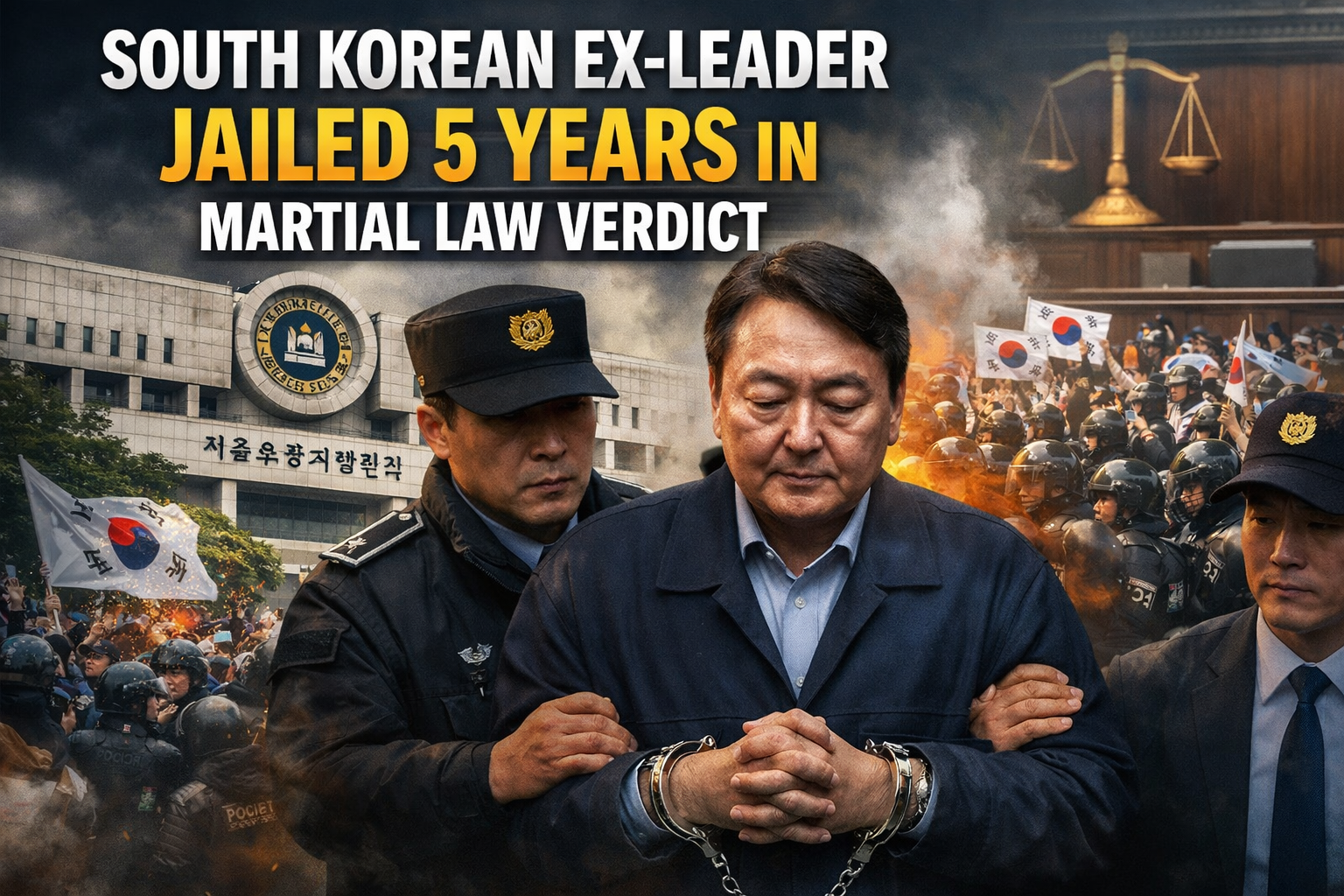
South Korea has witnessed one of the most consequential legal and political moments in its modern history as a court sentenced former president Yoon Suk Yeol to five years in prison. This verdict marks the first judicial ruling related to the controversial declaration of martial law that shook the nation in December 2024.
The decision has not only intensified political divisions but also reopened national debate around constitutional limits, presidential authority, and the resilience of South Korea’s democratic institutions. The ruling is being seen as a precedent-setting judgment that could influence multiple upcoming trials against the former leader.
Background: The 2024 Martial Law Crisis Explained
What Triggered the Crisis?
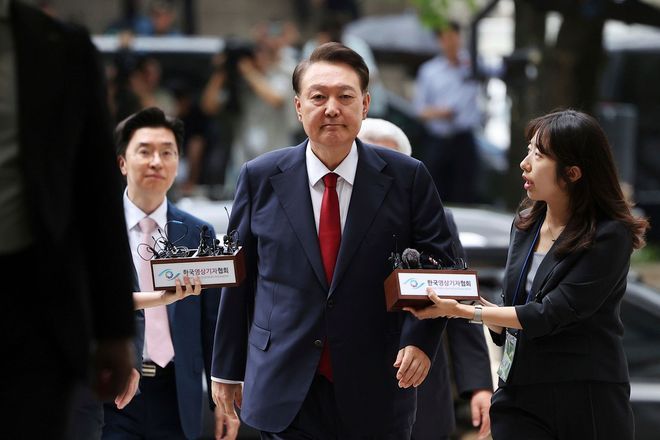
On December 3, 2024, South Korea was thrust into political turmoil when then-president Yoon Suk Yeol briefly suspended civilian rule by declaring martial law. The move, justified by Yoon as an emergency measure to protect the constitutional order, instead triggered mass protests, parliamentary resistance, and widespread international concern.
Critics argued that the declaration was unconstitutional and disproportionate, especially given South Korea’s long struggle to overcome authoritarian rule since the late 20th century.
Public Reaction and Political Fallout
- Massive street protests erupted in Seoul and other major cities
- Opposition lawmakers mobilized to block enforcement
- Civil society groups condemned the move as authoritarian
- International observers raised alarms over democratic backsliding
Within weeks, Yoon was ousted from office, leaving behind a fractured political environment and a series of legal battles that would soon follow.

The Court Verdict: Five Years in Prison
Charges Brought Against Yoon Suk Yeol
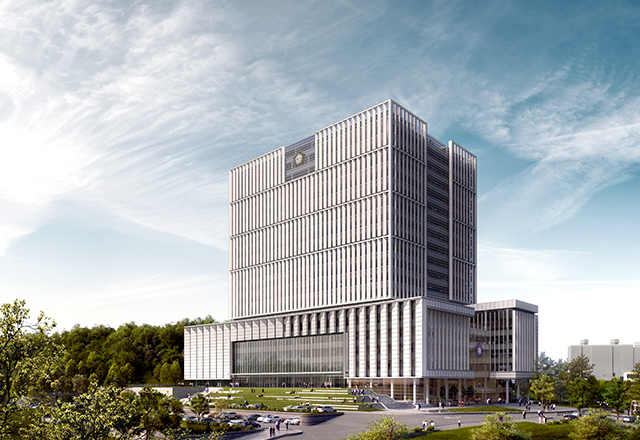
On Friday, a judge at Seoul Central District Court found Yoon guilty on multiple counts, including:
- Obstructing justice by blocking investigators from detaining him
- Excluding cabinet members from a key martial law planning meeting
- Abuse of presidential authority during a constitutional crisis
However, the court ruled Yoon not guilty of forging official documents, citing insufficient evidence.
Judge’s Remarks on the Case
Judge Baek Dae-hyun delivered a sharply worded judgment, stating that Yoon:
“Displayed an attitude that disregarded the Constitution.”
The judge emphasized that as president, Yoon had a supreme duty to uphold democratic norms and the rule of law—an obligation the court found he had gravely violated.
Prosecutors vs Defense: A Clash of Interpretations
Prosecution’s Argument
Prosecutors had sought a 10-year prison sentence, arguing that Yoon deliberately interfered with legal procedures and undermined democratic governance. In a separate case, they have even demanded the death penalty, accusing him of being the “ringleader of an insurrection.”
According to prosecutors, Yoon showed:
- No remorse for his actions
- Continued defiance toward constitutional institutions
- A willingness to destabilize democracy for political survival
Defense’s Response
Yoon Suk Yeol has consistently denied breaking any law. His defense rests on the claim that:
- Martial law was a constitutional emergency power
- His actions aimed to “protect the nation”
- Opposition parties had created an “unconstitutional dictatorship” through legislative dominance
In his closing remarks, Yoon declared:
“There was no other option but to awaken the people, who are the sovereign.”
The Insurrection Trial: What Happens Next?
February 19 Verdict Looms
The most serious charges against Yoon are still pending. The court is scheduled to rule on insurrection charges on February 19, a decision that could dramatically alter his legal fate.
If found guilty:
- Yoon could face life imprisonment or death
- Actual execution is unlikely due to South Korea’s execution moratorium since 1997
- The verdict could permanently redefine limits of presidential power
Separate Trial Over North Korea Drone Allegations
In another explosive case, Yoon faces accusations of aiding the enemy by allegedly ordering drone flights over North Korea. Prosecutors claim these actions were meant to justify the declaration of martial law by escalating national security tensions.
This trial further complicates Yoon’s legal situation and adds a national security dimension to his already extensive list of charges.
Democratic Implications for South Korea
A Test of Institutional Strength
South Korea’s handling of this case is being closely watched globally. Analysts argue that:
- The verdict demonstrates judicial independence
- Democratic institutions are holding leaders accountable
- No individual is above the Constitution
For a country with a history of authoritarian rule, the case underscores how far South Korea has come in enforcing democratic norms.
Public Opinion Remains Divided
Despite the conviction, Yoon retains a loyal support base. His supporters argue that:
- He acted out of necessity
- The judiciary is politicized
- Opposition forces manipulated legal processes
Meanwhile, critics see the ruling as long-overdue justice and a warning to future leaders against abusing emergency powers.
International Reaction and Global Significance
Global Media and Diplomatic Responses
International media outlets, including AFP, have framed the verdict as historic. Diplomats and political analysts worldwide view the case as a critical example of democratic accountability in Asia.
Lessons for Other Democracies
The Yoon Suk Yeol case offers important lessons:
- Emergency powers must have clear limits
- Judicial oversight is essential during crises
- Democratic backsliding can be resisted through lawful institutions
SEO FAQs: People Also Ask
Why was Yoon Suk Yeol sentenced to prison?
He was convicted of obstructing justice and abusing presidential authority during the 2024 martial law crisis.
How long is Yoon Suk Yeol’s sentence?
He has been sentenced to five years in prison, with the option to appeal within seven days.
Is Yoon Suk Yeol facing more trials?
Yes. He faces an insurrection verdict on February 19 and another trial related to alleged drone flights over North Korea.
Could Yoon face the death penalty?
Prosecutors have demanded it in a separate case, but execution is highly unlikely due to South Korea’s long-standing moratorium.
Conclusion: A Defining Moment for South Korea’s Democracy
The jailing of South Korea’s former president marks a defining chapter in the country’s political history. While the legal battles are far from over, the first martial law verdict sends a powerful message about constitutional accountability.
Whether seen as justice served or political retribution, the case of Yoon Suk Yeol will shape South Korea’s democratic trajectory for years to come—both at home and in the eyes of the world.
About the Author