🔹 Meta Description
🔹 Focus Keyword
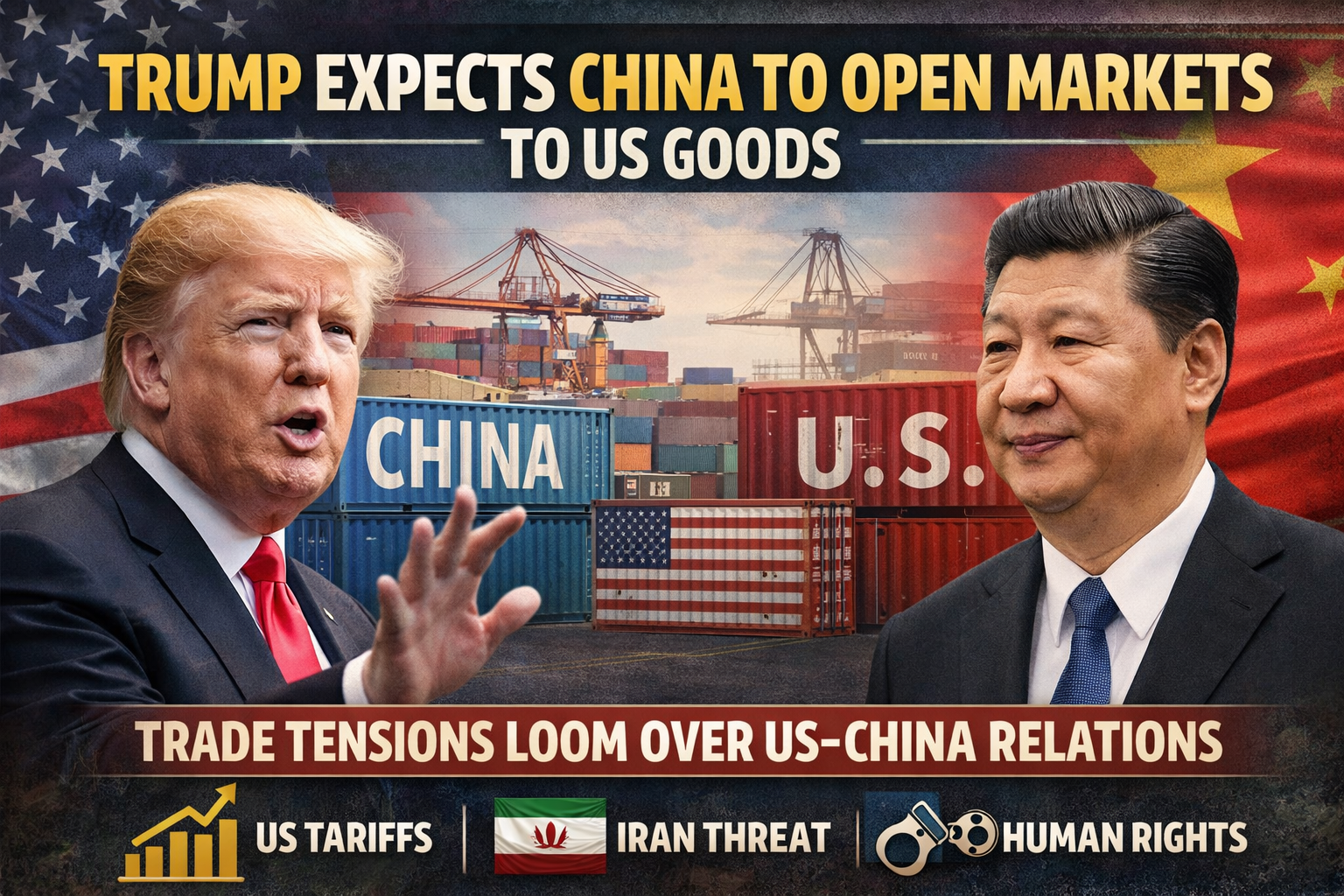
Trump expects China to open markets to US goods
🔹 Secondary Keywords
- US China trade relations
- Trump China markets
- US tariffs on China
- China US trade tensions
- Trump Iran tariff threat
- US foreign policy China
Trump Expects China to Open Its Markets to US Goods
The remarks come at a time when US-China relations remain strained, shaped by years of disputes over tariffs, intellectual property rights, human rights concerns, and broader geopolitical conflicts.
Trump Signals Optimism on US-China Trade
While speaking to reporters at Joint Base Andrews, President Trump was asked whether he believed China could open its domestic markets to US exports.
“I think it’s going to happen,” Trump said, without providing further details.
Though brief, the comment reignited debate about the future of US-China trade relations, which have been marked by uncertainty, competition, and periodic confrontations.
A History of Strained Relations Between Washington and Beijing
The relationship between the world’s two largest economies has remained tense for years. Key areas of disagreement include:
🔹 Trade Tariffs
🔹 Intellectual Property Disputes
Washington has long accused Beijing of failing to protect intellectual property rights and engaging in unfair trade practices, allegations China has consistently denied.
🔹 Human Rights Concerns
US officials have raised concerns over human rights issues in Xinjiang, Hong Kong, and Tibet, which China considers internal matters.
Trump’s Claim of a Strong Relationship With Xi Jinping
Despite these disputes, Trump has frequently emphasized his personal rapport with Chinese President Xi Jinping. He has argued in the past that strong leader-to-leader relationships can help resolve even the most complex diplomatic disagreements.
Analysts note that while personal diplomacy can ease tensions, structural trade and policy differences continue to pose significant challenges.
Iran Tariff Threat Adds New Strain
Just a day before his comments on China, Trump threatened to impose a 25% tariff on countries that trade with Iran, a move that could further complicate relations with Beijing.
China is Iran’s largest trading partner, and such a policy could reopen old diplomatic and economic wounds between Washington and Beijing.
China Condemns Trump’s Tariff Warning
Beijing swiftly condemned Trump’s threat, criticizing it as destabilizing and counterproductive. Chinese officials warned that unilateral tariffs could undermine global trade stability and escalate tensions.
Trump, however, did not provide specific details on how or when such tariffs might be implemented, leaving markets and governments uncertain.
Iran at the Center of Global Tensions
The situation surrounding Iran has added another layer of complexity to US foreign policy decisions.
Key Developments Include:
- Iran experiencing some of its largest anti-government protests in years
- A 12-day conflict last year between Iran and US ally Israel
- US airstrikes on Iranian nuclear facilities in June
Trump has been weighing how to respond to Iran’s internal unrest and regional actions, a decision with wide-ranging global implications.
How Iran Policy Could Impact US-China Relations
Experts warn that aggressive US measures against Iran could indirectly affect China, given Beijing’s economic ties with Tehran. This creates a delicate balancing act for Washington as it seeks to:
- Pressure Iran
- Avoid escalating tensions with China
- Maintain stability in global energy markets
Market Reaction and Global Trade Implications
Trump’s comments on China opening its markets were welcomed cautiously by investors, though lack of concrete policy details limited immediate market impact.
Economists stress that meaningful market access would require:
- Reduction of non-tariff barriers
- Fair competition for US companies
- Regulatory transparency in China
Can China Realistically Open Its Markets?
While China has made incremental reforms in recent years, critics argue that foreign firms still face significant restrictions, particularly in:
- Technology
- Finance
- Agriculture
- Manufacturing
Opening markets to US goods would likely require major policy shifts from Beijing.
Domestic Political Considerations
Trump’s stance on China also plays into domestic political dynamics. Tough rhetoric on trade has historically resonated with American voters concerned about:
- Job losses
- Manufacturing decline
- Trade deficits
At the same time, US exporters have pushed for improved access to Chinese consumers.
The Role of Global Alliances
US-China trade issues do not exist in isolation. Washington’s approach to Beijing is closely watched by:
- European allies
- Asian trading partners
- Global institutions
Any shift in trade policy could reshape international economic alliances.
A Cautious Path Forward
While Trump’s optimism suggests potential dialogue, analysts caution that words alone are unlikely to resolve deep-rooted disputes. Progress will depend on:
- Concrete negotiations
- Verifiable commitments
- Mutual concessions
Conclusion: Optimism Amid Uncertainty
President Donald Trump’s belief that China could open its markets to US goods signals cautious optimism amid a backdrop of geopolitical tension and economic rivalry. With unresolved disputes over tariffs, Iran, and global security, the path forward remains uncertain.
Whether Trump’s confidence translates into real policy change will depend on actions taken by both Washington and Beijing in the months ahead.
About the Author