Meta Description:
Focus Keyword:
Trump declines to endorse 2028 successor
Secondary Keywords:
- Trump Vance Rubio 2028
- Republican succession debate
- JD Vance 2028
- Marco Rubio future run
- Trump endorsement strategy
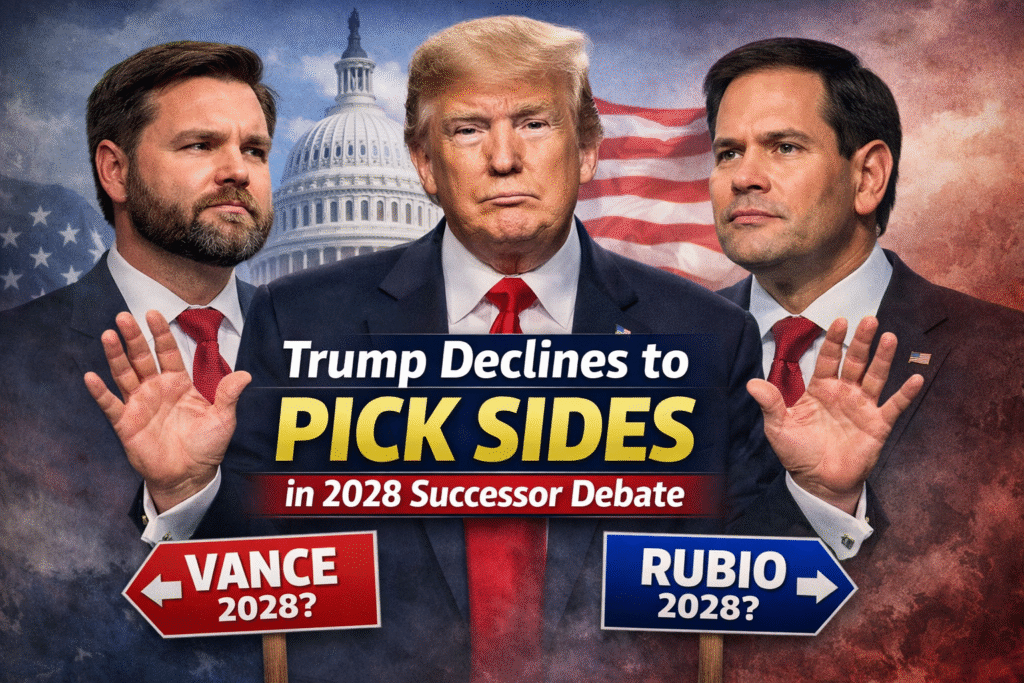
Trump Declines to Take Sides Between Vance and Rubio in the 2028 Successor Debate
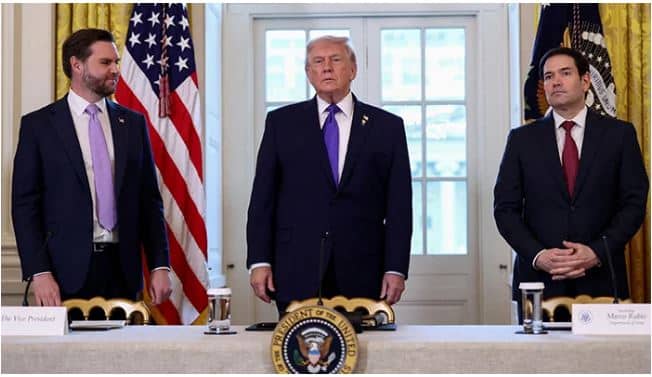
In a recent interview, U.S. President Donald Trump was asked to weigh in on who should succeed him as the Republican nominee in the 2028 presidential race — his Vice President JD Vance or his Secretary of State Marco Rubio. Rather than choosing one over the other, Trump opted to remain neutral, praising both leaders and stressing that it’s too early to pick favorites.
This move has sparked widespread discussion across political circles, raising questions about Trump’s strategy, the future of the GOP, and how early endorsements influence presidential succession. In this comprehensive article, we explore the background, context, reactions, and what this decision means for American politics.
Background — The Rising Stakes in GOP Succession
Who Are JD Vance and Marco Rubio?
Marco Rubio, on the other hand, serves as the Secretary of State and was a Republican presidential candidate in 2016. Though part of the GOP establishment, Rubio has also gained visibility on the global political stage and earned respect as a diplomat.
Both figures bring different strengths to the table, making the question of Trump’s endorsement particularly significant.
Trump’s Statement — Neutral but Strategic
In his interview with NBC News, Trump said he wouldn’t take sides between Vance and Rubio, describing them both as “fantastic” and highlighting that there are still three years until the 2028 election. He emphasized that it’s unnecessarily early to choose a successor and that both men have unique strengths.
From Trump’s perspective, refraining from endorsing one candidate over the other keeps the party united and avoids internal conflicts too soon.
What Trump Actually Said
Here’s a closer look at some remarks attributed to Trump during the interview:
- Trump said he would be “inclined” to endorse a successor, but said it’s too early to do so.
- He lauded both Vance and Rubio as intelligent and capable leaders.
- Trump mentioned that the two might even make a strong team if they were to run together.
- When asked about the possibility of serving past 2028 — a topic of speculation given his frequent joking about a third term — Trump said “It would be interesting”, though the U.S. Constitution prohibits it.
Why Trump’s Neutral Stance Matters
Trump’s decision to withhold an endorsement at this stage is more than just indecision — it reflects a calculated political strategy.
Avoiding Early Factionalism
By praising both Vance and Rubio, Trump minimizes the risk of fracturing support within the GOP too early. Endorsing one could alienate supporters of the other, especially if both continue to build momentum. Remaining neutral keeps Trump positioned as the unifying leader of the party.
Keeping the Field Open
The 2028 race is expected to be competitive. Trump’s neutrality signals that the field has room to grow, inviting other potential candidates to consider running. A crowded primary could benefit Trump’s political influence by keeping him at the center of discussions.
Preserving Influence Without Commitment
Even without endorsing a specific successor, Trump’s praise for both candidates reinforces his influence on GOP direction. Supporters of Vance and Rubio will likely continue to see Trump as an important figure in the party’s future, regardless of whom he ultimately supports.
Reactions from Political Analysts and Experts
Political analysts have offered varied interpretations of Trump’s comments:
Supporters of Vance See Strength
Many conservatives view Vance as the heir apparent to carry forward Trump’s policy agenda. Vance’s background, rhetoric, and political alignment with Trump’s base make him a strong potential nominee.
Rubio’s Supporters Value Experience
Rubio, meanwhile, draws praise for his foreign policy experience and his role as Secretary of State. Advocates for Rubio argue that his broader international exposure could appeal to moderate Republicans and undecided voters.
Mixed Signals from the Party
Some analysts suggest Trump’s refusal to pick a side may simply be a sign that he’s weighing other future options, including the possibility of endorsing someone outside of the current two names. It’s not uncommon for party leaders to withhold endorsement until dynamics are clearer.
What This Means for the 2028 Election Landscape
Trump’s comments have broader implications for national politics:
The GOP Primary Is Still Wide Open
Without Trump’s clear endorsement, the Republican primary process remains wide open. Politicians from across the conservative spectrum could still enter the race, expanding competition.
Vance and Rubio Must Now Define Their Own Paths
Both Vance and Rubio will need to rely more heavily on their own political messaging, strategy, and grassroots support. While Trump’s praise helps, an actual endorsement could sway influential donors and voters — something neither has secured yet.
Democratic Contenders Can Watch and Prepare
On the other side of the aisle, Democratic hopefuls are observing the GOP’s dynamics closely. A divided or undecided Republican field could benefit Democratic candidates by creating openings for contrast and coalition-building — especially in swing states.
Going Forward — What to Watch
Here are key developments to monitor in the lead-up to 2028:
1. Will Trump Eventually Endorse Someone?
Trump has hinted that he might endorse later, suggesting that timing and political conditions will determine his choice.
2. Who Else Might Enter the Race?
Other GOP figures — from governors to senators — may seize the moment to announce their candidacies, adding more complexity to the primary.
3. How Will Vance and Rubio Position Themselves?
Each candidate must build independent brand appeal while navigating Trump’s shadow — a delicate balancing act.
Conclusion
President **Donald Trump’s decision to decline taking sides between JD Vance and Marco Rubio for the GOP’s 2028 successor spot is a strategic move that preserves party unity and keeps the political landscape open. His praise for both candidates reinforces their profiles while delaying potential internal conflict.
As the 2028 election draws closer, Trump’s eventual endorsements — if any — will significantly shape the Republican nomination process. Whether Vance, Rubio, or another contender emerges as the front-runner, the coming years promise an intriguing and dynamic chapter in American politics.
FAQs
Q1: Why did Trump refuse to endorse Vance or Rubio?
A: Trump said it’s too early and that both leaders are doing a great job, suggesting that picking one now could cause unnecessary division.
Q2: Does Trump plan to run in 2028 himself?
A: While Trump joked about the idea of remaining in office until 2029, he acknowledged the constitutional restriction, and there’s no confirmed 2028 campaign at this time.
Q3: What does this mean for the GOP?
A: It suggests a potentially competitive and open Republican primary, with multiple candidates likely emerging.
About the Author